Tag: Musicianship

  • So Your Band Sounds Like A Train Wreck

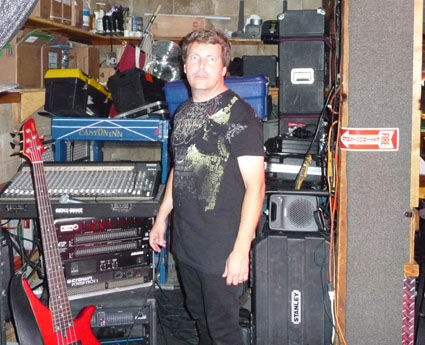
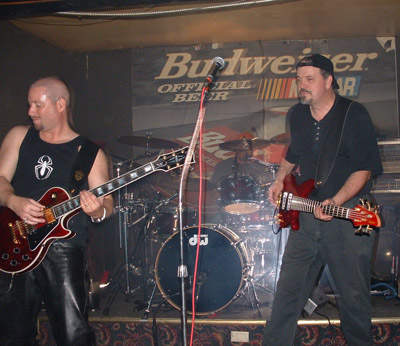
    In Stereo Jamming Live At The Canyon Inn
    In Stereo Started Out Sounding Like A Train Wreck

       So you’ve searched for musicians, finally found a the perfect band lineup, and you’ve decided what type of music you want to play with your live band. You’ve had a few band practices but your new live band sounds like a train wreck. This is a common problem and believe it or not, can be very simple to solve.

       The first question you have to answer is, what’s causing your band to sound like a train wreck. The most common problems I’ve seen in new bands are centered around the ability to play to a beat and individual player preparation.    (more…)

  • Tips For Auditioning For A Live Band

    Kyle Johnson
    Bill Barely Passed His Audition

       The other day I wrote a post about joining a band by answering Musician Wanted ads. Naturally the next step in the process is going to the audition so that’s what we’ll discuss today. I’ve played in a lot of live bands over the years and been to my share of live band auditions too. Auditions are always an interesting process and I’ve always learned something going through the band audition process. Today I’m going to give you a few tips on preparing to audition for a live band.

       The first thing you want to do is make sure you have the correct address for where the audition is going to be held. I remember once getting so lost going to an audition that I was an hour late. Needless to say, it didn’t make a good impression and I didn’t get the gig. Get directions and a phone number you can call in case you get lost or you get stuck in traffic.     (more…)

  • How To Become An Expert Musician

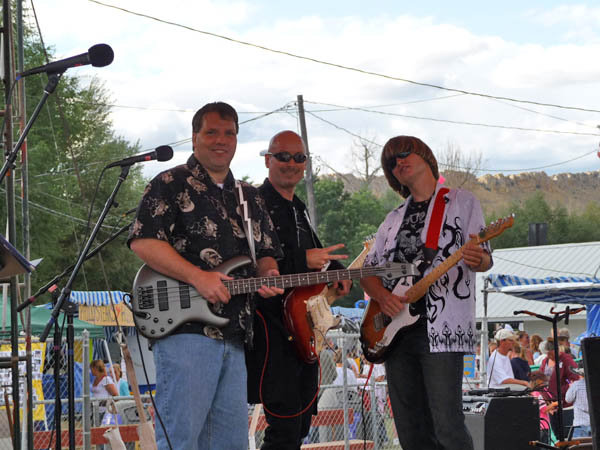
    Kent, Matt and Erik Rolling Up Gig Hours
    Kent, Matt and Erik Rolling Up Gig Hours

       I recently had a discussion with a good friend about how the 10,000 hour rule applies to musicians that play in a live band. If you haven’t heard of the 10,000 hour rule it simply states that if you spend 10,000 hours of deliberate practice on something you will become an expert. Deliberate practice being defined as a focused study and application of a skill or subject. If you’ve been working at your job for 10 years then you’re most likely an expert as 10 years job experience roughly translates into 10,000 hours of deliberate practice at your job.

       I’m sure that if you’ve been doing the same job for 10 years that your co-workers probably consider you an expert at whatever your job function is. The same thing can be said for musicians. I’ve been playing in live bands for 28 years now and I have become an expert at playing in live bands through experience. I’ve put my 10,000 hours in by practicing my instrument, preparing for live performances, setting up, tearing down and hauling equipment. I’ve put the hours in working with agents, club managers and other musicians. I’ve put the hours in mixing sound, programming sound patches and running amplification.   (more…)
  • An Easy Tip On Using A Metronome To Improve Your Tempo

    Seiko DM70 Pocket Metronome
    Seiko DM70 Pocket Metronome

       One of the biggest problems I’ve seen in my years of playing in a live band is the ability to keep a solid, steady tempo. If your band is speeding up and slowing down all the time, it’s darn near impossible to keep a danceable groove going. It’s primarily the responsibility of the drummer, bass player and rhythm guitarist to keep the tempo but everyone benefits when the entire band can hold a solid tempo.

       The best way I’ve found to practice keeping a solid tempo is using a metronome. The obvious way to practice is to set the metronome to a tempo that you want to work on and then practice along with it. This is a very basic way to use the metronome but it’s not the best way I’ve found to use it for improving your ability to hold a tempo.

    (more…)

  • Practicing One Hour A Day Will Make You An Elite Musician

    Joe Satriani Is An Elite Musician
    Joe Satriani Is An Elite Musician

       I’ve been playing in a live band since I was 14 years old. I’ve met and played with some incredible, elite musicians over the years. I’ve always had the goal of being the absolute best musician I could possibly be. So I’ve asked a lot of musician’s over the years how they got to be so good. The answer is always the same: Practice. 

       I’ve written several posts about the topic of practicing on Live Musician Central because I’m a huge believer in the power of practice to make you a better musician. I know for a fact that people with very little natural talent are some of the best players around. The reason they’re so good is because of their work ethic when it comes to practicing their instrument. Having a talent for music and talent for playing your instrument is a blessing and will help you to become a good player. But to be a truly great player, you need to work and that means practicing.     (more…)

  • Music Theory Explained In The Guitar Grimoire – A Notated Intervallic Study Of Scales

    The Guitar Grimoire - A Notated Intervallic Study Of Scales
    The Guitar Grimoire – A Notated Intervallic Study Of Scales

    The ongoing quest for every live musician is to increase their knowledge and playing skills. When you play in a live band it’s really to your advantage to have a good grasp of general music theory. Every guitarist I know wants to be able to play blazing fast guitar licks but most of them fall short when it comes to knowing what scales or notes to play and when to play them. I’ve played with guys that were lightning fast but their playing wasn’t musical because of their poor note selection.

       The other day I wrote about the excellent book “The Guitar Grimoire – Scales and Modes” which introduces you to the concept of music scales and modes as well as telling you which chords to play them over. The whole point to studying and learning the scales and modes is being able to put them into practice while your band plays the chordal harmony for them. Today I’m going to talk about the Scales and Modes companion book “The Guitar Grimoire – A Notated Intervallic Study Of Scales“.     (more…)

  • Master Scales And Modes Music Theory With The Guitar Grimoire

    The Guitar Grimoire - Scales & Modes
    The Guitar Grimoire – Scales & Modes

    I’m always trying to increase my knowledge and skills on the guitar and keyboard so I can get better at playing in my live band. I’ve been playing guitar for about 28 years but it seems like there’s always something more to learn. I’ve got a good background of music theory but I’ve always wanted to be better at applying various scales and modes to different chord structures. Today I want to tell you about an excellent book I just picked up called The Guitar Grimoire – Scales & Modes by Adam Kadmon.

    (more…)

  • In A Live Band, Multiple Skills Will Increase Your Value

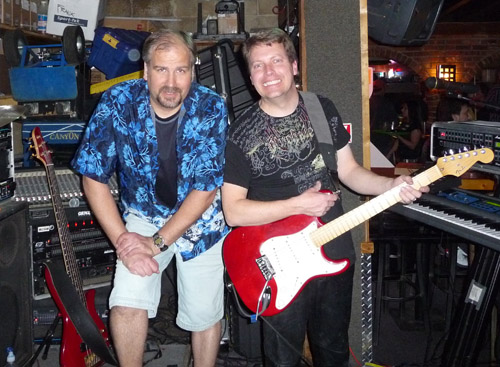
    Frank and Kyle Are Both Multi-Instrumentalists
    Frank and Kyle Are Both Multi-Instrumentalists

     One thing I’ve noticed in my years of playing in a live band is how important members are that can do multiple things in the band. I was in a band where we had a lead guitar player that was a good lead guitar player, but that’s all he did. He didn’t sing lead or sing backup, he only brought his guitar and his amp and he didn’t book any of the gigs. Yes he would have the songs all learned and he played his parts perfectly but he just didn’t seem to contribute as much as the other members of the band.

    (more…)

  • How A Handy Pocket Metronome Can Increase Your Playing Speed And Accuracy

    Seiko DM70 Pocket Metronome
    Seiko DM70 Pocket Metronome

      Playing in a live band can be very challenging rhythmically because the thing that really makes a live band sound great is keeping the rhythm and groove happening. It’s so important to practice to some sort of rhythm when you work on your instrument whether it be keyboards, guitar, bass or drums. I’ve written about practicing to a beat and not a metronome and I still feel that practicing to a beat is the best way to get good at playing rhythmically. Practicing to different types of beats will teach you to play in a musical groove. With that being said, there are times when you want to practice with a plain old metronome.

    (more…)

  • Jeff Beck Video – Jeff Beck at Ronnie Scott’s Jazz Club 2007 – Angel (Footsteps)

    Jeff Beck Live At Ronnie Scott's Jazz Club
    Jeff Beck Live At Ronnie Scott's Jazz Club

       What can I say about the great Jeff Beck? Of all the guitarists in history, he’s my personal favorite. If you listen to his recordings it’s easy to believe that he uses a lot of studio wizardry on his guitar. The truth is, he doesn’t. He uses very little in the way of effects. He’ll have a Wah-Wah, echo and a distortion pedal in his signal chain and that’s usually it. He doesn’t usually use a guitar pick because he prefers to use his fingers to create his amazing sound although I have seen him employ the use of a plectrum when he’s after a certain attack. The big question is, can he create what he does live? The answer is a great big YES! He’s simply an amazing guitar player and everytime I see a video of him perform I just can’t stop watching it.    (more…)

Powered by eShop v.6